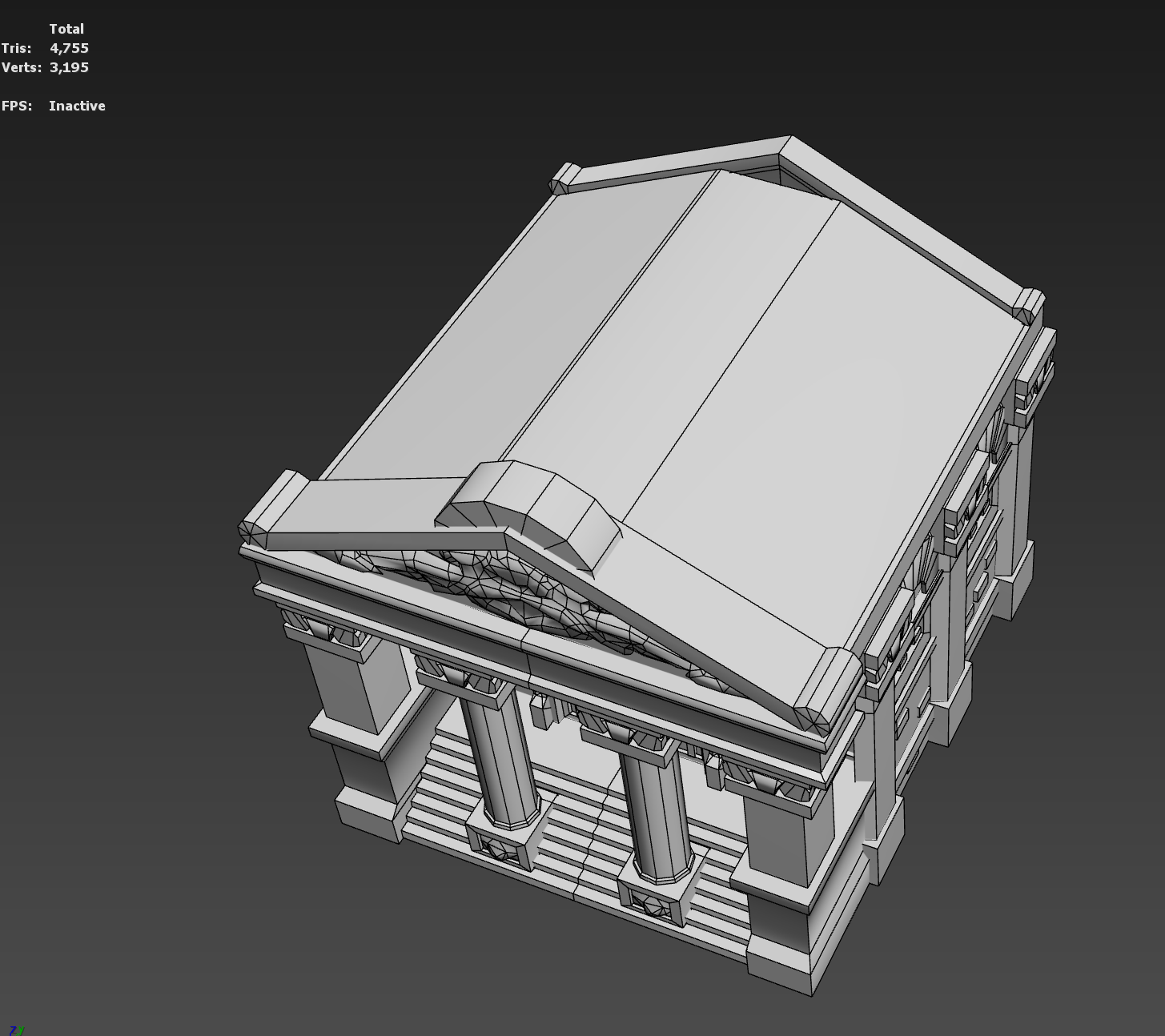
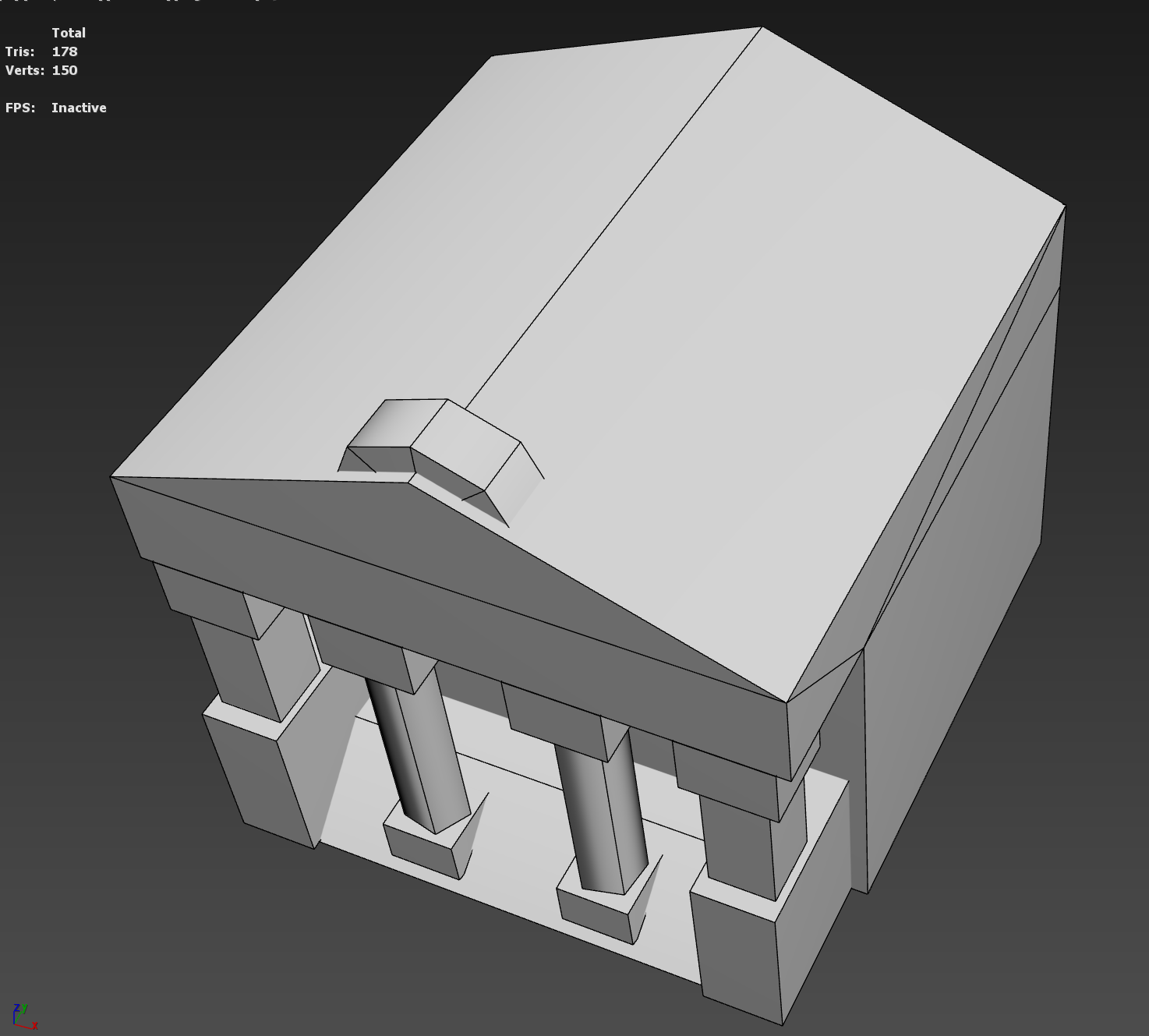
Even background objects that don't take up much screen space affect the cumulative vertex count and rasterizer cost.
This work organizes production rules for removing unnecessary edges and back faces based on silhouette, texel density, and camera viewpoint.
Implementation
01
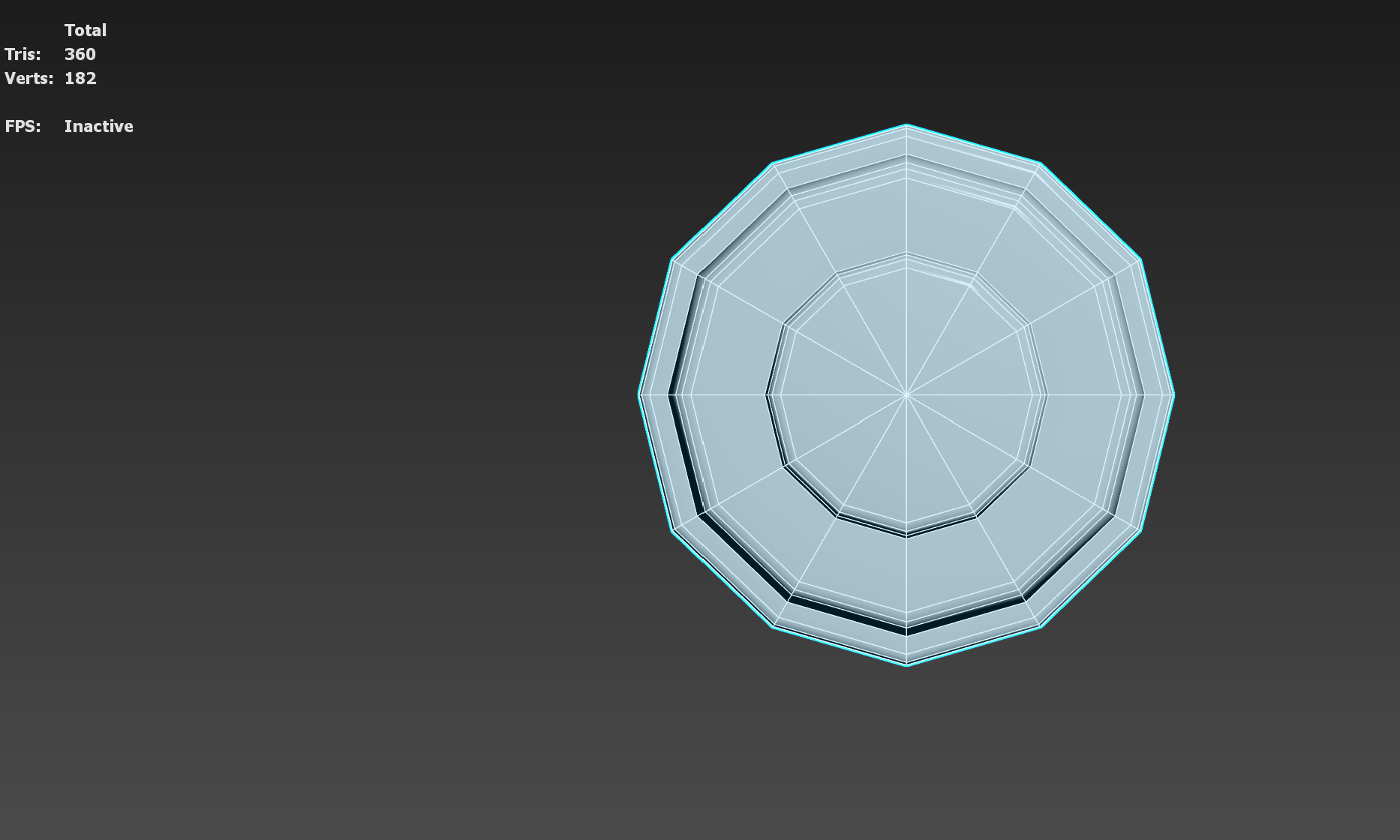
Cylinder wireframe
02
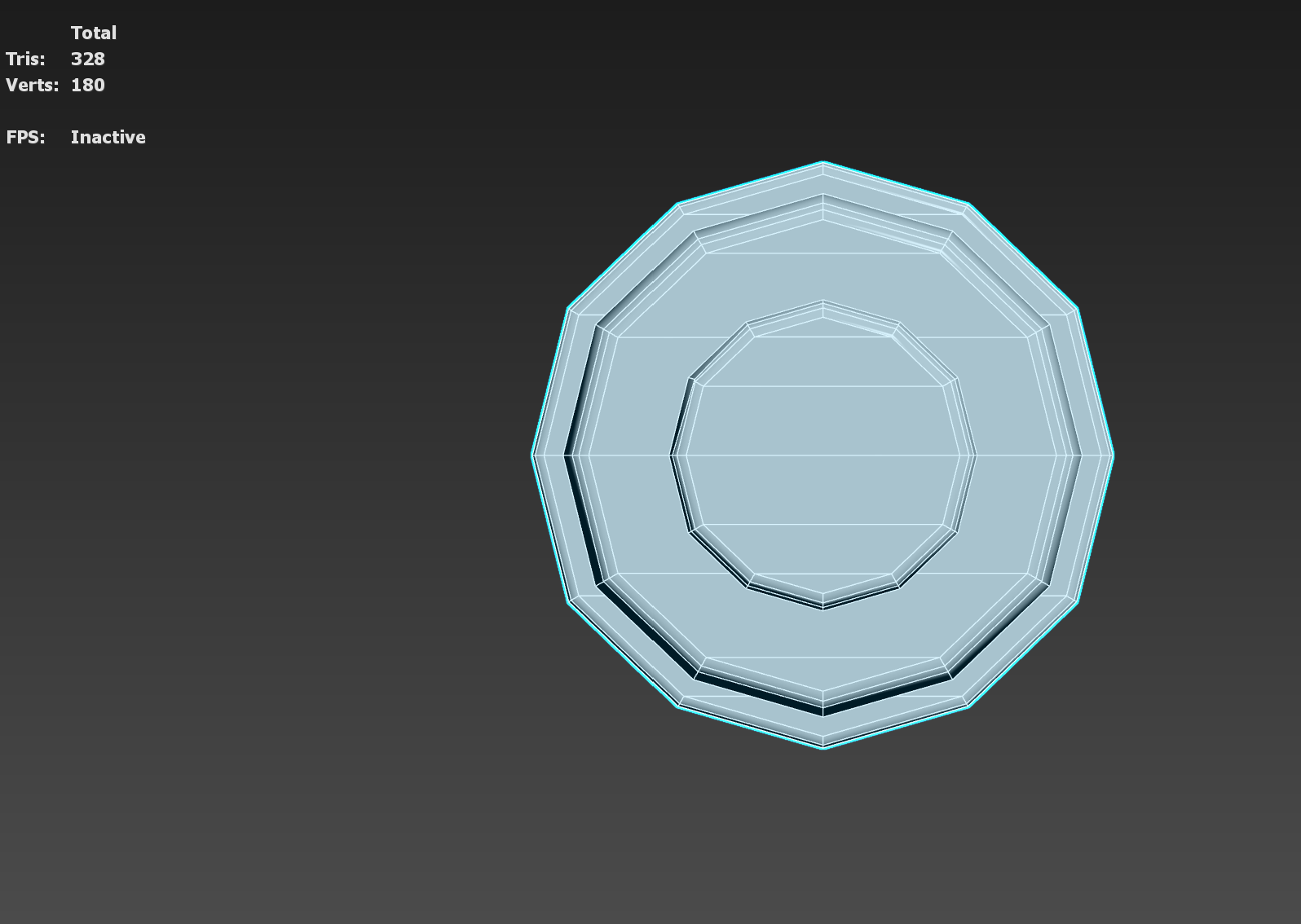
Cylinder wireframe
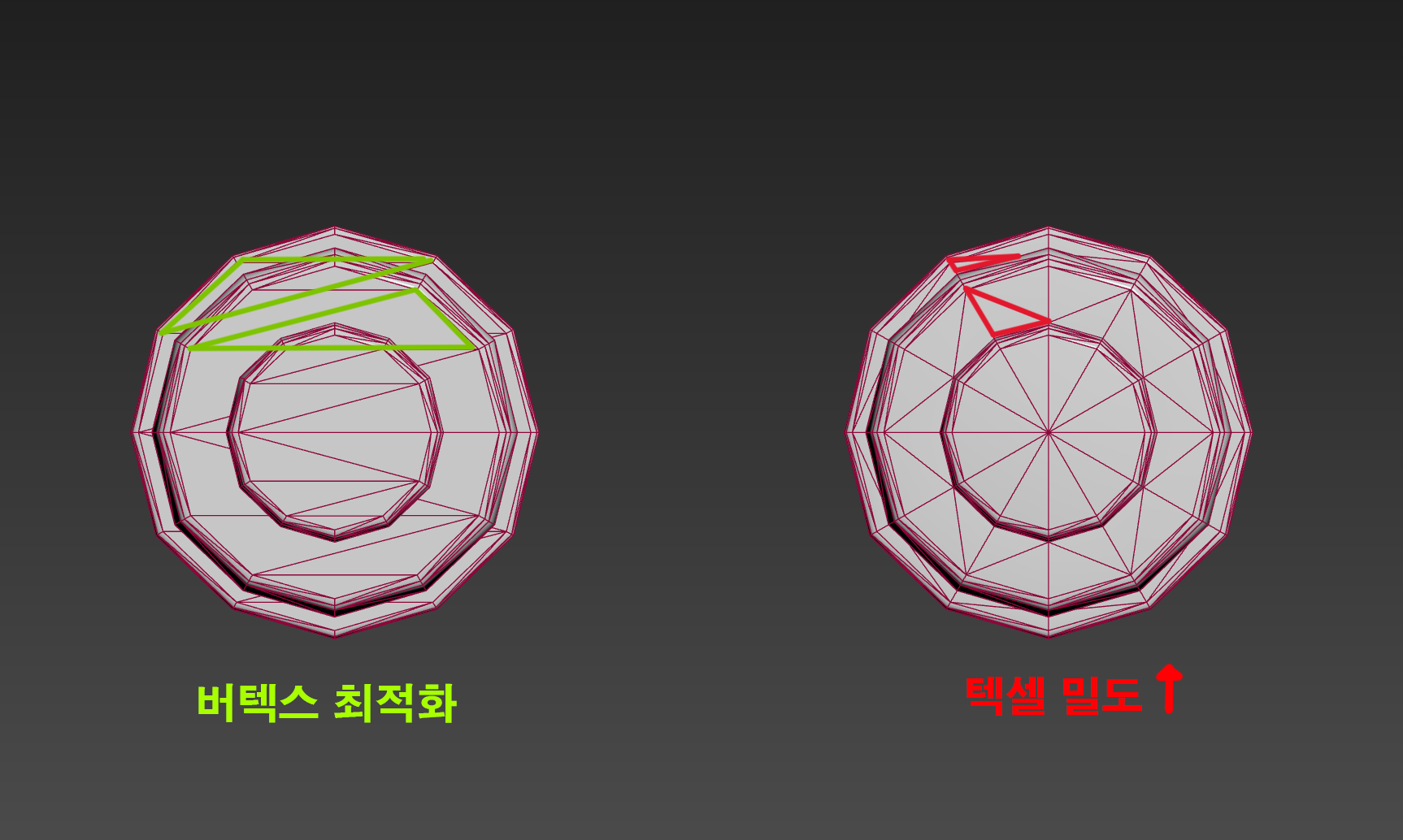
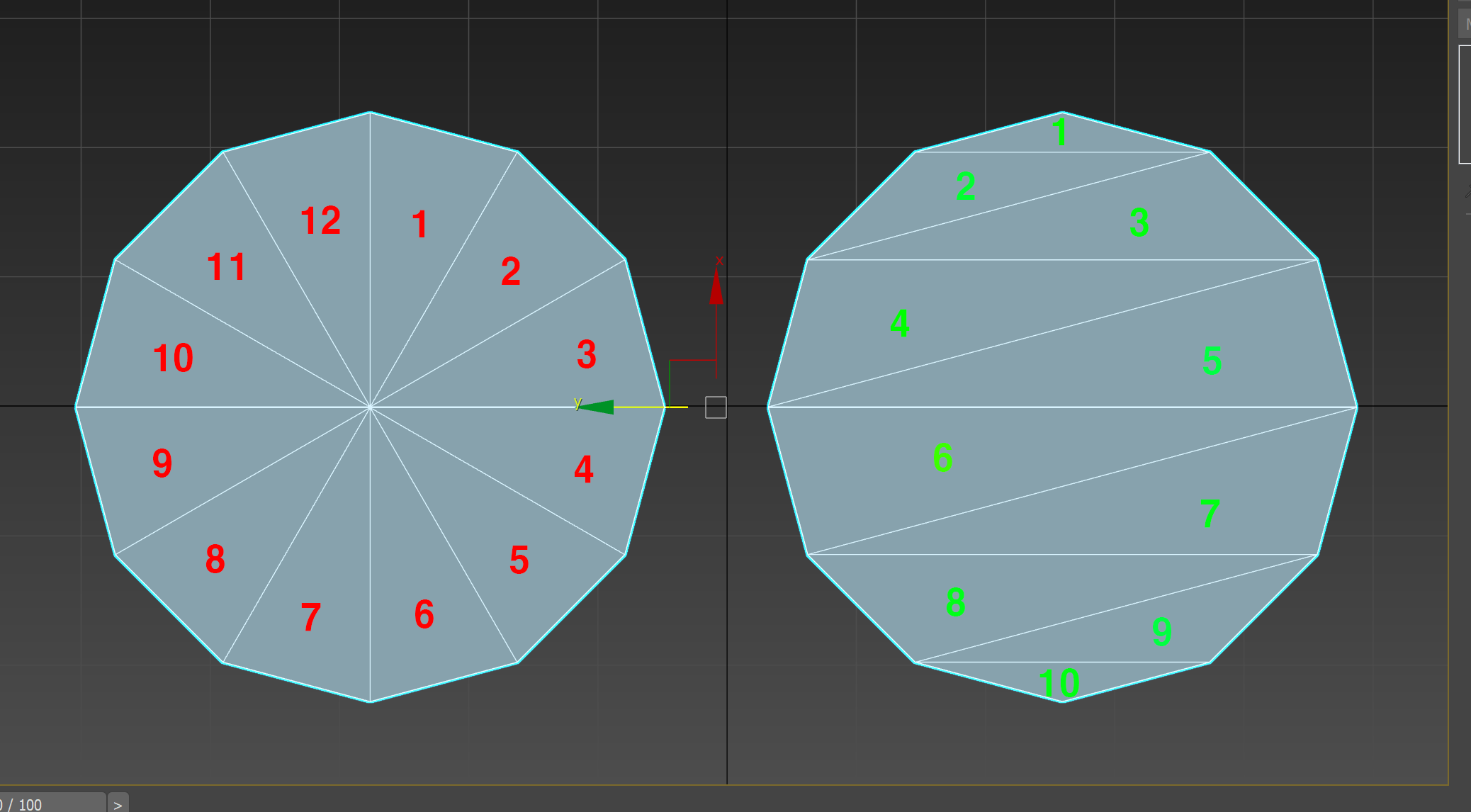
The difference is small, but if the same silhouette can be achieved with fewer tris, we adopt the right-side wireframe flow going forward.
03
Extrude cylinder wireframe (bottom)
Before / After
Before — Tris 360 / After — Tris 328
BEFORE
AFTER
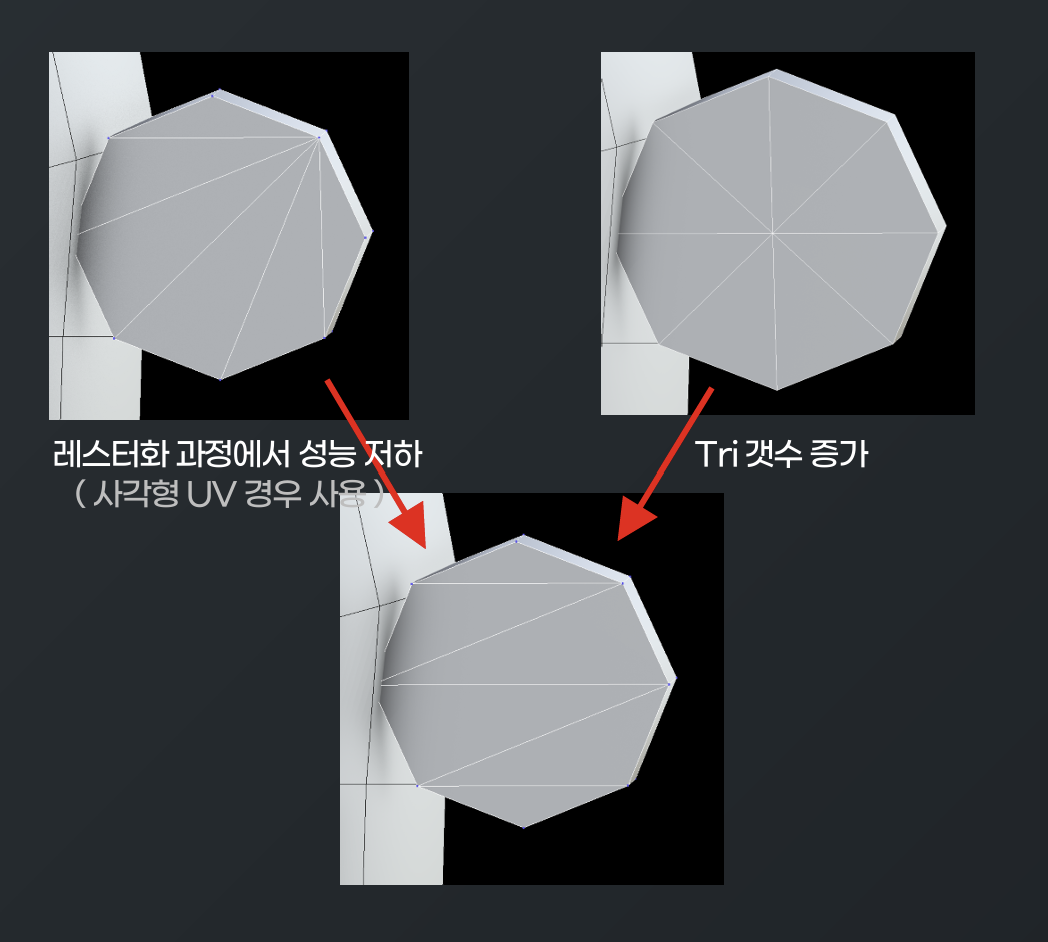
텍셀 밀도 <-> 버텍스 카운트
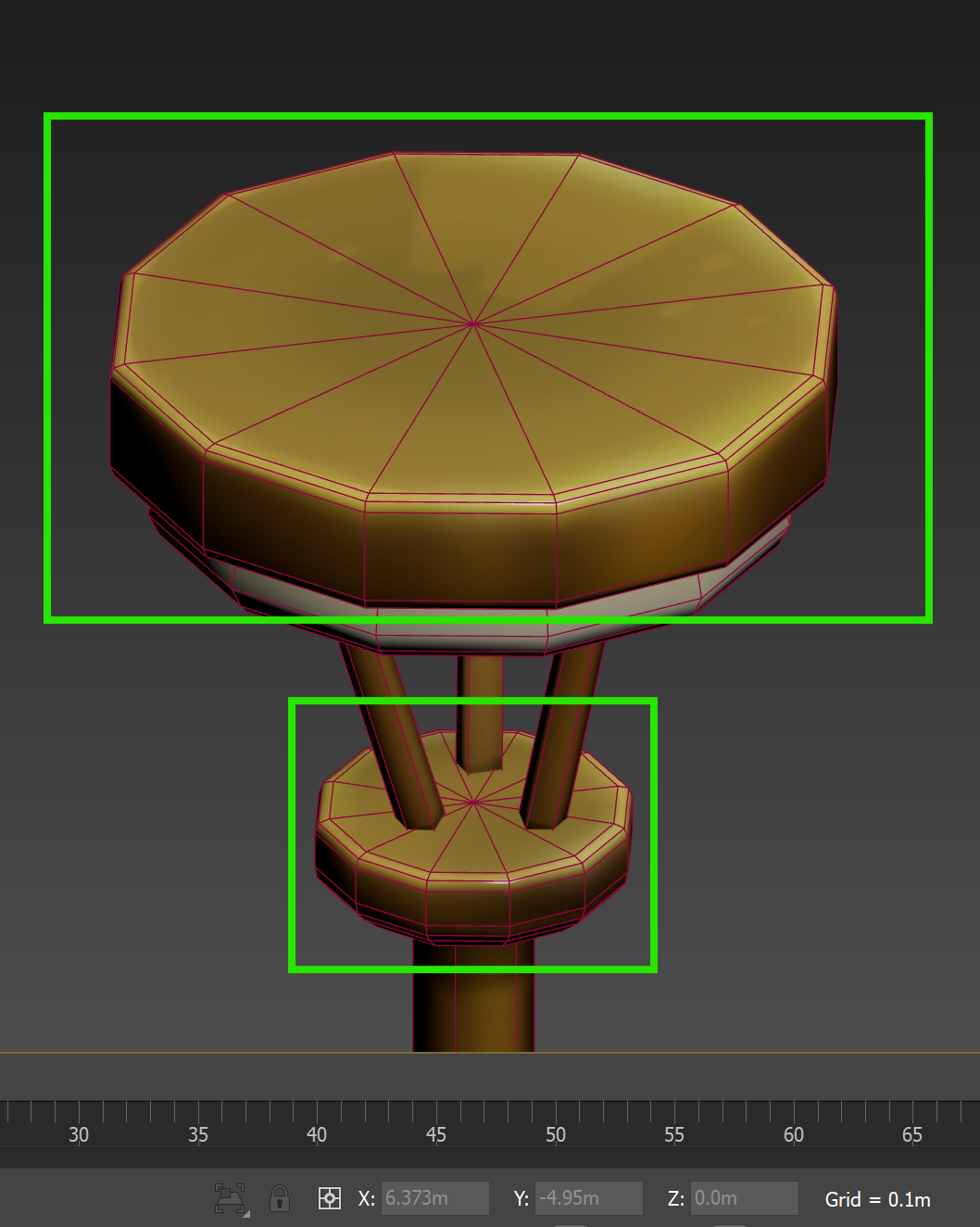
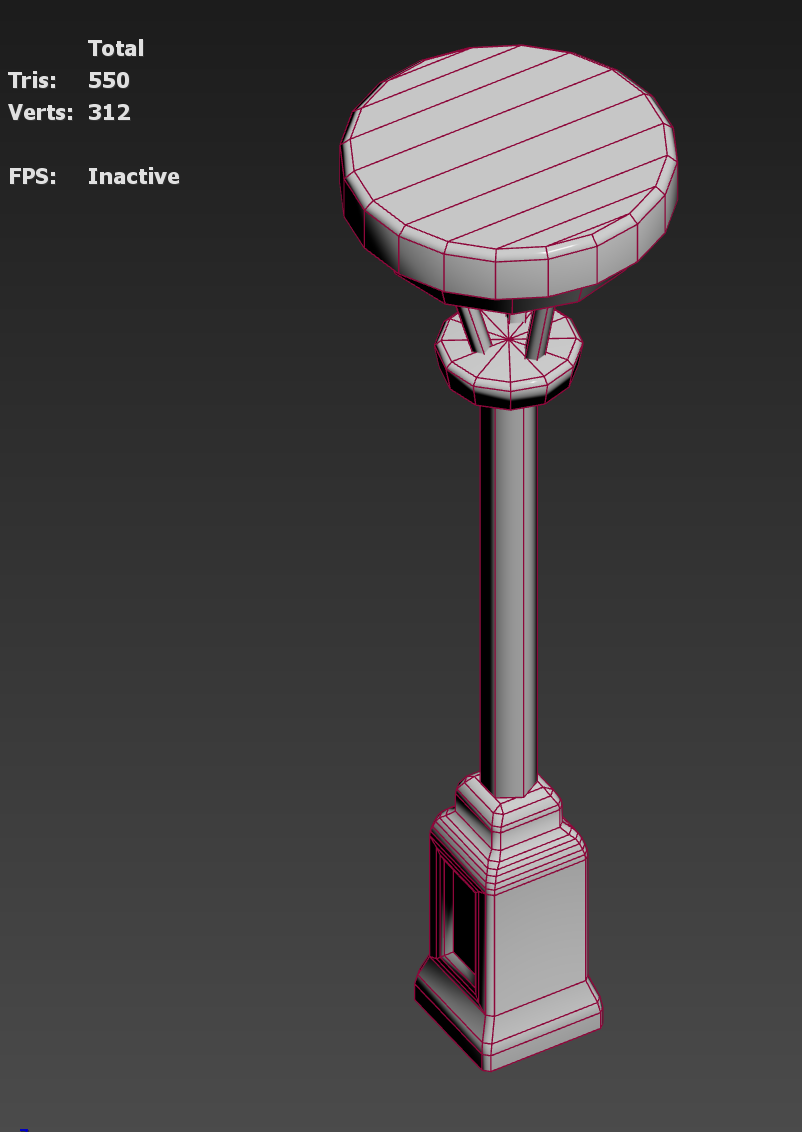
Decide by comparing texel density and vertex count. Where tile maps are used or high texel density isn't required, use a wireframe structure with a lower vertex count.
크기별 폴리곤 차이
The size is 4× different but the same polygon count is used.
Before / After
Polygon comparison
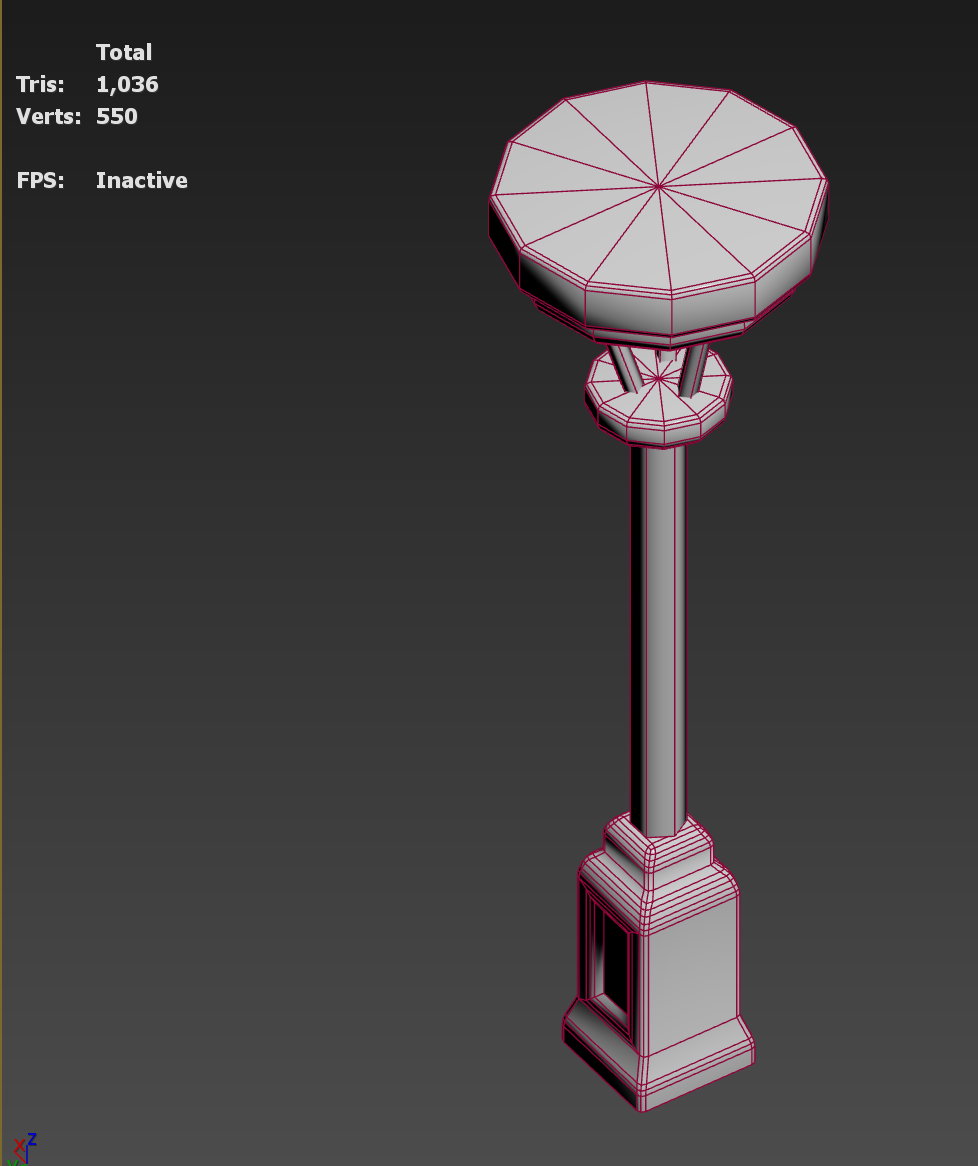
550 -> 312
BEFORE
AFTER
Gallery
Implementation
01
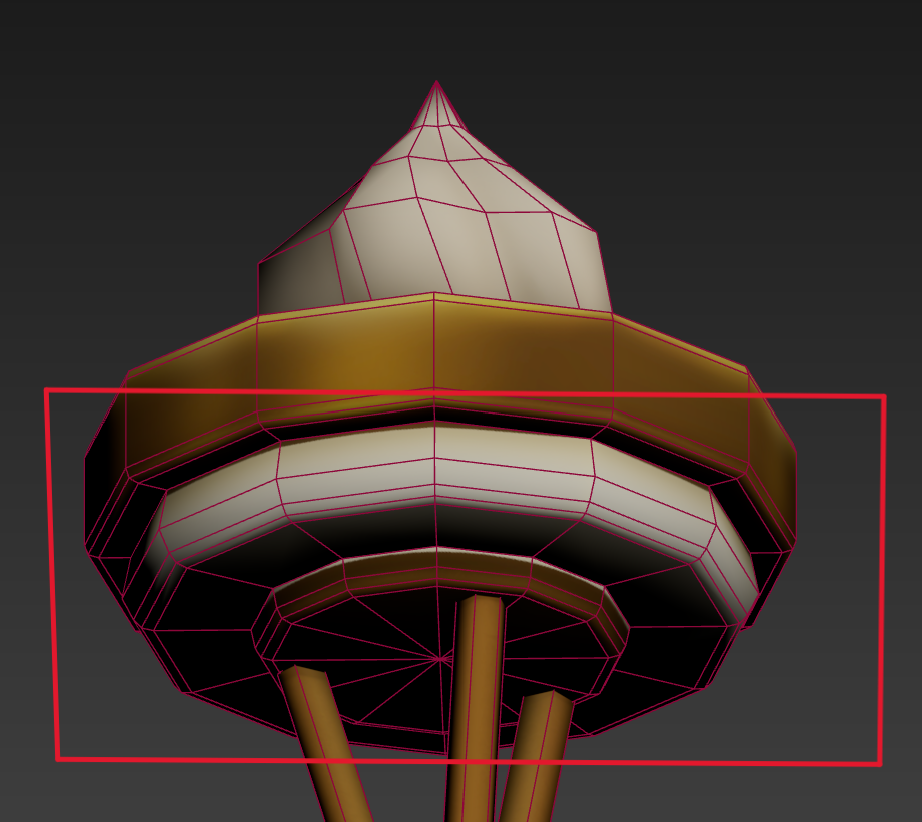
Whether to keep back faces in modeling
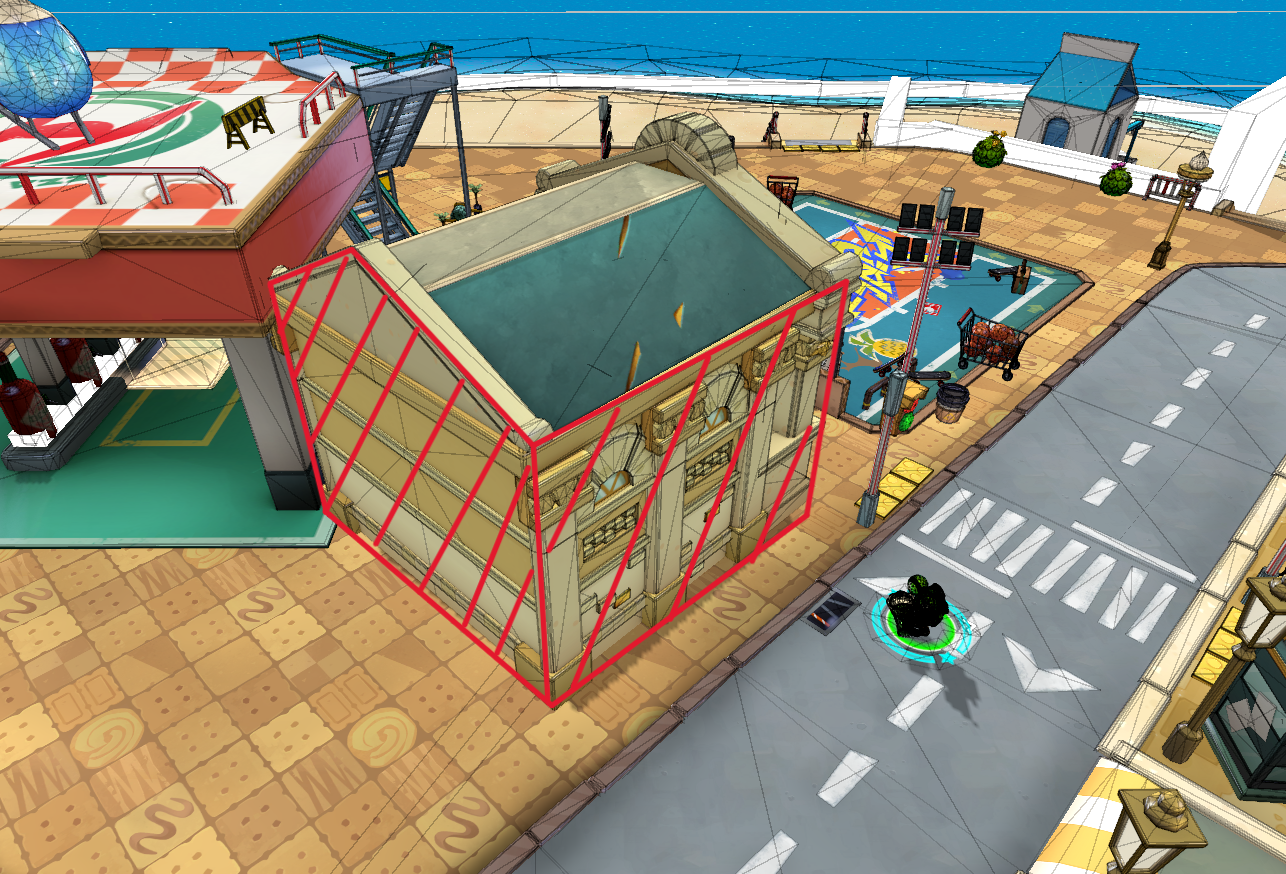
From the current viewpoint, the back faces can't be seen. If there's no other use, confirm from the camera viewpoint and remove them as part of the workflow. Even when back faces are used for shadows, baked or real-time shadows can be handled with a shadow dummy.
Before / After
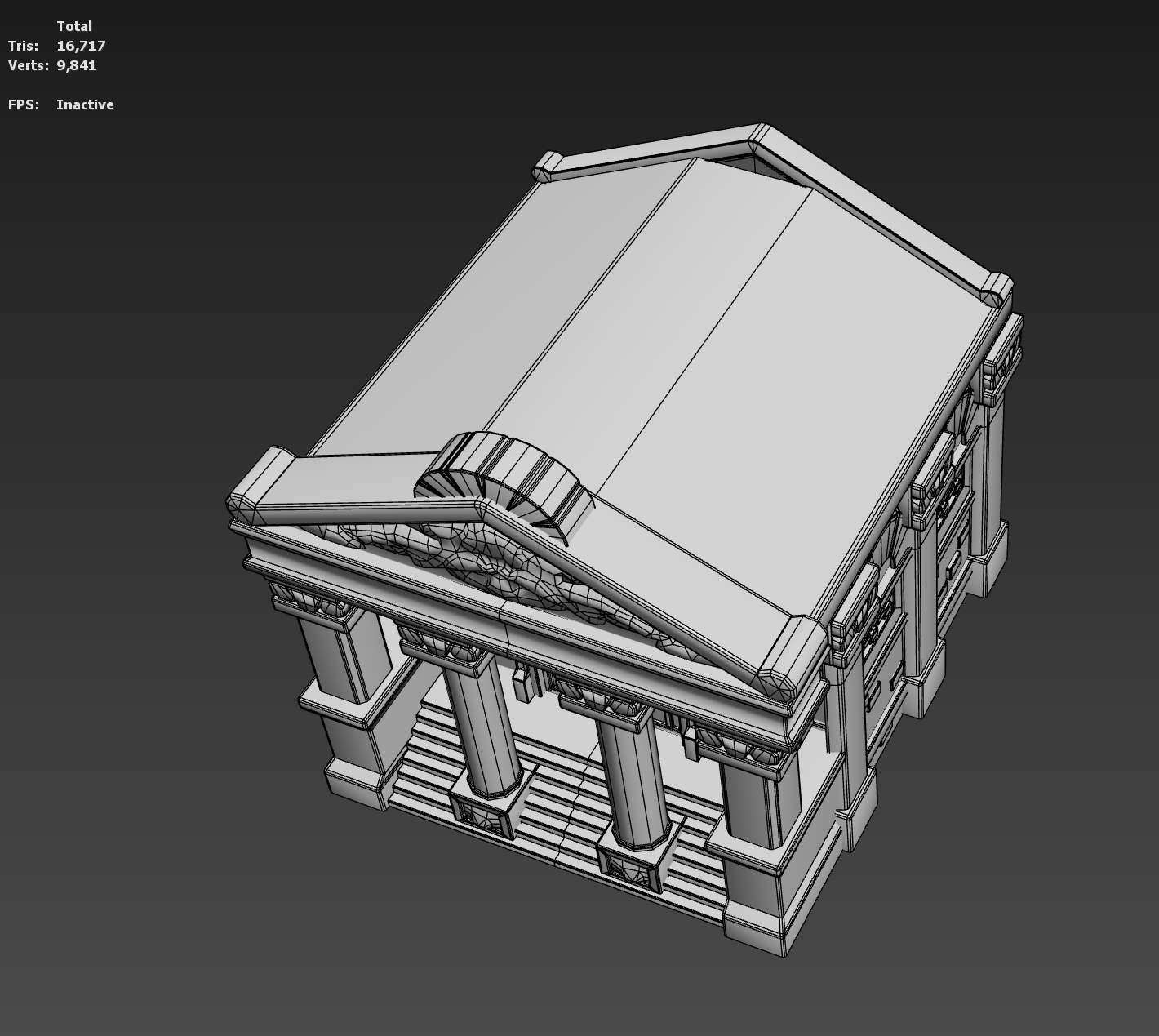
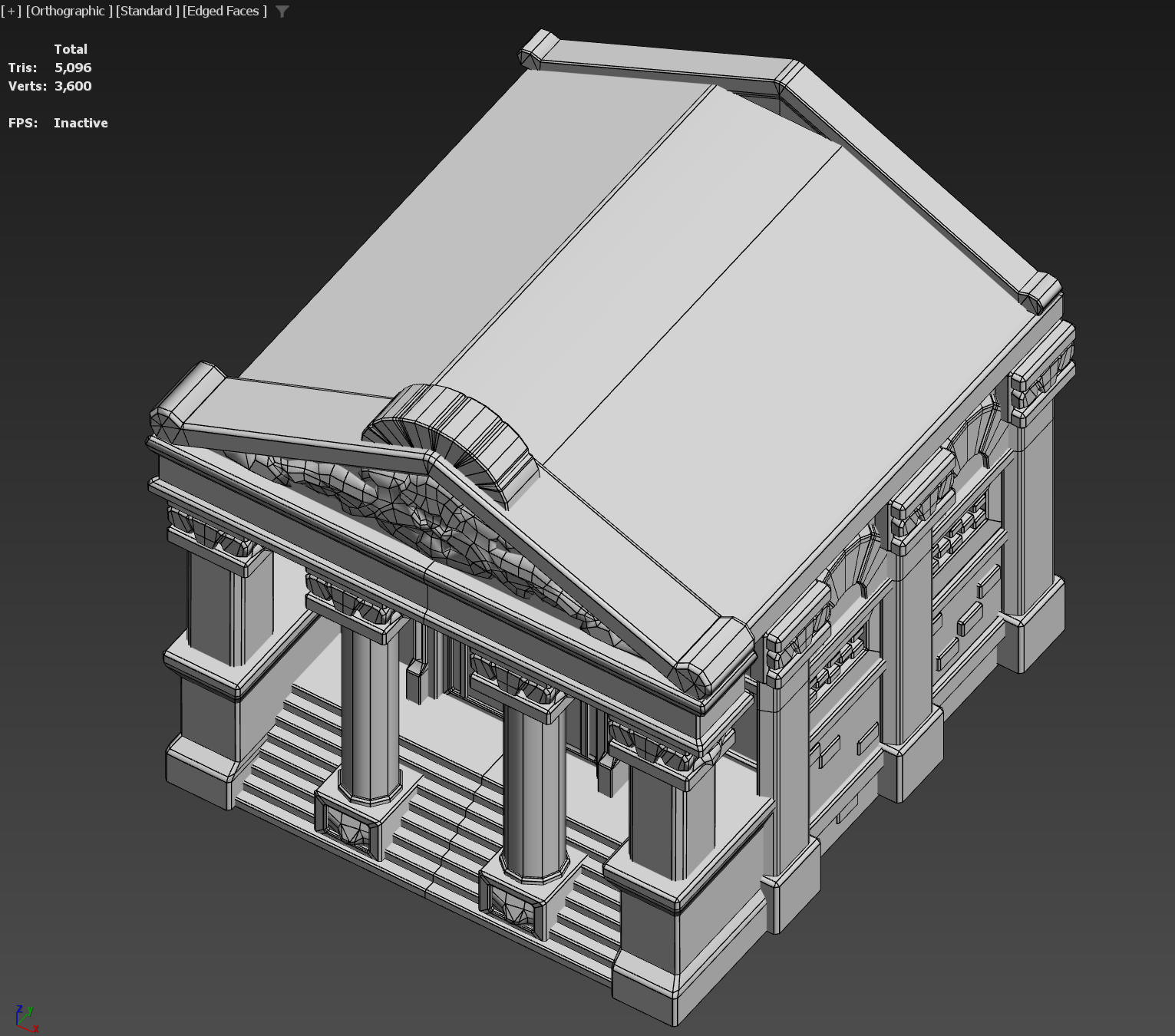
Vertex count reduced by 60%
LOD 0 - 9,841 -> 3,600
LOD 1 - 3,195 / LOD 2 150
BEFORE
AFTER
Gallery
Result
With no silhouette change, Tris 360 → 328 / Verts 9,841 → 3,600
Object count 550 → 312, ~43.3% reduction with a quality bump
Documented criteria for removing back faces not visible to the camera
Not just blanket reduction — consider texel density judgement and silhouette preservation together